
Mold inspection
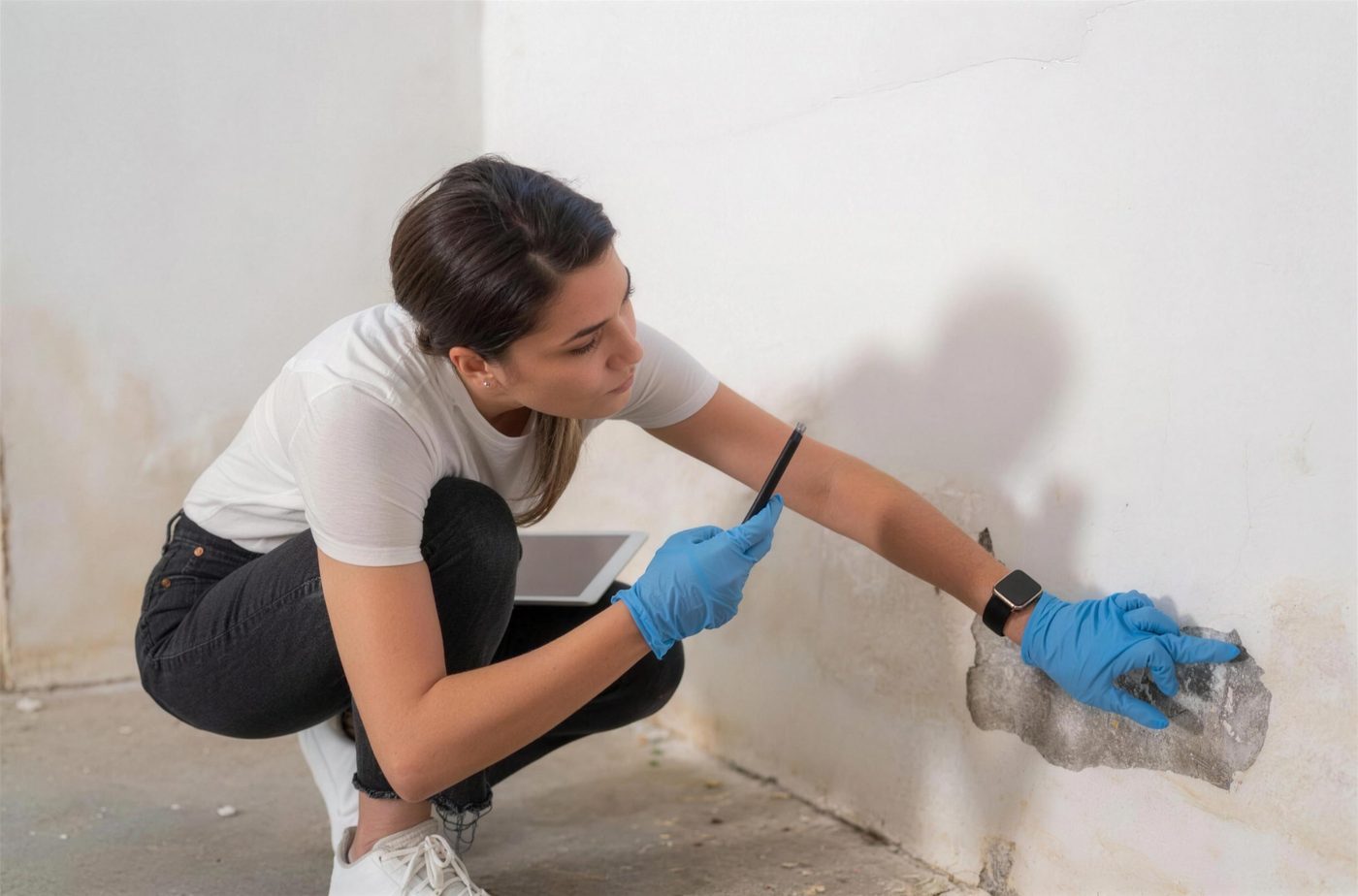
A good mold inspection starts with water, because mold only grows where there is moisture. We talk through what you have seen and smelled, where leaks have happened and how long ago. Then we inspect the areas of concern and the places mold hides: behind baseboards, under sinks, in basements and crawl spaces, around windows, in attics and inside HVAC systems.
Moisture meters find wet materials behind walls and under floors that look fine from the outside. That tells us where growth is likely, even before anything is opened up, and it points to the leak or condensation problem that has to be fixed.
Request a quoteor call (718) 390-0914 in New York, (609) 208-3276 in New Jersey
Mold testing
Testing shows whether you have a mold problem, how big it is and what kind of mold it is. Air samples are taken in the affected rooms and compared with an outdoor sample. When indoor spore counts are higher than outside, or the types are different, mold is growing inside. Surface samples taken from visible growth identify what it is.
Samples go to a laboratory, and you get a written report that explains the results in plain language with what to do next. Testing keeps you from paying for remediation you do not need, and from missing growth you cannot see. It also gives landlords, tenants, buyers and insurers documentation they can rely on.
When mold testing makes sense
- A musty smell with no visible mold
- Health symptoms that seem tied to one building
- After a leak, flood or sewage backup
- Before buying, selling or leasing a property
- Tenant complaints in a rental building
- Confirming a remediation job was done right
Request a quoteor call (718) 390-0914 in New York, (609) 208-3276 in New Jersey
Mold remediation and mold removal
Scrubbing or spraying mold without containment usually spreads spores through the rest of the building. Proper mold remediation seals the work area with plastic sheeting, keeps it under negative air pressure with HEPA filtered machines so spores cannot escape, and moves contaminated materials out in sealed bags.
Porous materials that are moldy, like drywall, insulation, ceiling tile and carpet, are removed and replaced. Hard materials like framing, concrete and metal are cleaned with HEPA vacuums and wiping, and treated. The goal is to bring the area back to normal conditions, not to paint over a stain.
Our mold remediation managers run the containment and removal, and our industrial hygienists understand the exposure side, which matters most in schools, offices, multifamily buildings and homes with children or someone with asthma.
Request a quoteor call (718) 390-0914 in New York, (609) 208-3276 in New Jersey
Clearance testing after remediation
Mold remediation is not finished until it is proven. After the removal and cleaning, the work area is inspected and air samples are taken before the containment comes down. If the results are not back to normal, the area gets cleaned again. Only then do walls get closed up and people move back in. On New York jobs, state law requires the clearance to be done by an independent licensed mold assessor, not the remediation contractor.
Request a quoteor call (718) 390-0914 in New York, (609) 208-3276 in New Jersey
New York and New Jersey mold rules
New York State licenses mold assessors and mold remediation contractors separately, and the same company cannot be both the assessor and the remediator on one project. On New York jobs we tell you up front which role we are filling and how the assessment and clearance will be handled, so the project follows the law and you have independent results.
New Jersey does not have a state mold license like New York's, so we work to the IICRC S520 mold standard there and tell you up front what applies to your job. In New York City, landlords also have duties under local law to address mold in apartments, and we can help property managers understand what that means for their building.
Request a quoteor call (718) 390-0914 in New York, (609) 208-3276 in New Jersey
Fixing the moisture so mold stays gone
Mold always follows water. A slow plumbing leak, a basement that takes on water, a bathroom with no ventilation, condensation in an attic or a roof leak that was patched but never dried. If the moisture source stays, the mold comes back no matter how well it was removed.
Part of every job is finding the cause and telling you plainly what needs to be fixed. When the cause is past water damage, our restoration crews can handle the drying and repairs as well.
Request a quoteor call (718) 390-0914 in New York, (609) 208-3276 in New Jersey