Water damage restoration
Water damage rarely stops where you can see it. A leak that shows up as a stain on the ceiling has usually soaked the insulation above it, run along the framing and settled into the subfloor or the wall below. Drywall wicks water upward. Hardwood cups and buckles. Carpet pad holds water long after the carpet feels dry.
Restoration means finding all of it and bringing every wet material back to normal moisture levels, or removing what cannot be saved. We use moisture meters to map how far the water traveled, then build a drying plan around what we find. Skipping that step is how a small leak turns into a mold problem a month later.
We work in single family homes, multifamily buildings, co-ops, offices, stores and commercial properties across New York City and New Jersey. Older buildings get extra care, because the plaster, flooring and paint that get wet are often the same materials that contain lead or asbestos.
Common causes we handle
- Burst and frozen pipes
- Washing machine, dishwasher and water heater failures
- Roof and window leaks
- Toilet and drain overflows
- Leaks from the apartment upstairs
- Storm water and street flooding
Request a quoteor call (718) 390-0914 in New York, (609) 208-3276 in New Jersey
Water removal and structural drying
The first job is getting the standing water out. Extraction equipment pulls water from carpet, pad and hard floors. Pumps handle basements with several inches or more. Wet materials that will not dry in place, like soaked drywall below the water line, saturated insulation and ruined carpet pad, are cut out and removed.
Then the structure gets dried. Dehumidifiers pull moisture out of the air and air movers push dry air across wet surfaces. Placement and the number of machines come from the moisture readings, not guesswork, and we check the readings as the drying goes so equipment can be moved where it is needed.
Drying is finished when the readings say it is finished. We record the numbers from the first day to the last, which is the record your insurance adjuster will want to see.
Request a quoteor call (718) 390-0914 in New York, (609) 208-3276 in New Jersey
Flooded basements and sewage backups
Basements on Staten Island and in low lying parts of Brooklyn, Queens and New Jersey take on water in heavy rain, and a backed up sewer line can fill one in an hour. Not all water is the same. The IICRC standard sorts it into three categories: clean water from a supply line, gray water from appliances and drains, and black water from sewage or outside flooding.
Black water carries bacteria and has to be handled as contaminated. That means protective equipment, removal of porous materials it touched, cleaning and disinfecting what stays, and drying after. We treat a sewage backup as an environmental cleanup, because it is one.
Request a quoteor call (718) 390-0914 in New York, (609) 208-3276 in New Jersey
Fire damage restoration
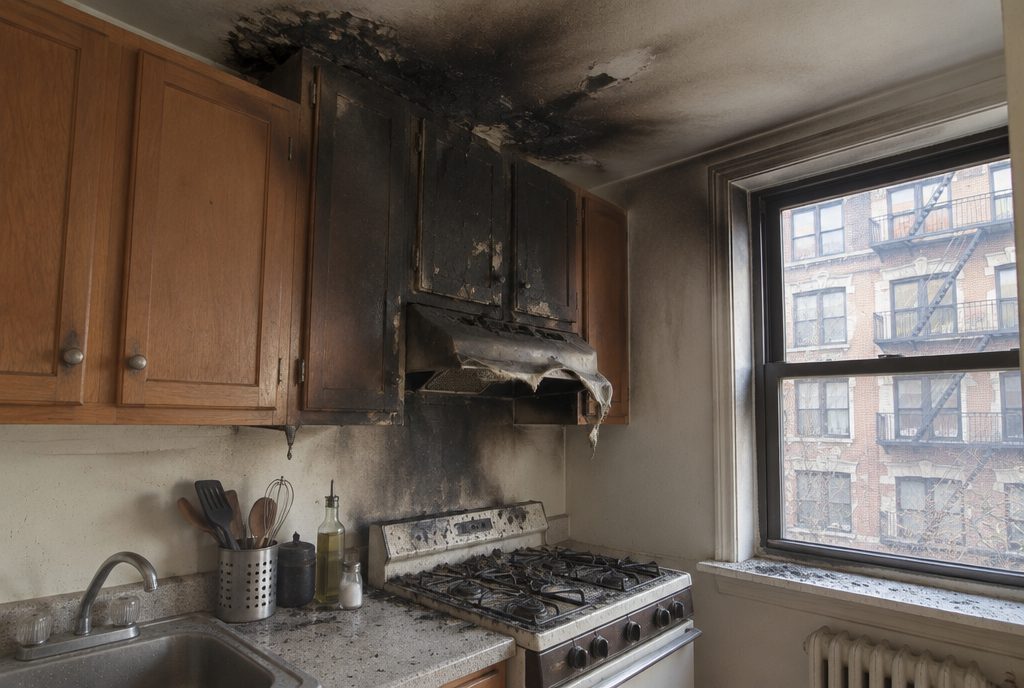
A fire leaves three problems behind: what burned, what the smoke reached, and the water used to put it out. Fire damage restoration deals with all three. We secure the property, remove debris and charred materials, and start drying out the water from the fire department right away, before it becomes a second disaster.
Contents that can be saved are cleaned. Structural materials that are charred or weakened are removed and replaced. Kitchen fires, electrical fires and larger structure fires all follow the same order: make it safe, remove what is ruined, clean what can be saved, then rebuild.
Fire also disturbs the building itself. Heat and demolition can release lead dust from old paint and fibers from asbestos materials. Our lead and asbestos inspectors can test before the tear out starts, so the cleanup does not create a new hazard.
Request a quoteor call (718) 390-0914 in New York, (609) 208-3276 in New Jersey
Smoke damage cleanup and odor removal
Smoke travels far past the room that burned. It moves through hallways, into closets, up wall cavities and through ductwork, and it leaves soot and odor on everything it touches. Soot is acidic and keeps staining and corroding surfaces the longer it sits.
Cleanup means removing soot from walls, ceilings, cabinets and contents with the method that fits each surface, cleaning the HVAC system so it does not keep spreading odor, and treating the odor at its source instead of covering it. Sealing and painting come last, once the surfaces are clean.
Request a quoteor call (718) 390-0914 in New York, (609) 208-3276 in New Jersey
Reconstruction after water and fire damage
We do not stop when the building is dry and clean. We carry the job through reconstruction: new drywall, insulation, flooring, trim, cabinets and paint, so the property is put back the way it was.
Keeping one company on the job from cleanup through rebuild means one point of contact, one schedule and no gaps where nobody is responsible. It also means the people rebuilding the walls already know what was found inside them.
Request a quoteor call (718) 390-0914 in New York, (609) 208-3276 in New Jersey
Working with your insurance claim
We document the damage from the first visit: photos of the affected areas, moisture readings, the drying log and a scope of the work. You can send that record to your insurance company and your adjuster. Coverage decisions are made by your insurer, but a clear record makes the conversation easier.
Request a quoteor call (718) 390-0914 in New York, (609) 208-3276 in New Jersey